Assignment 2 - Hurricanes
- What is a hurricane?
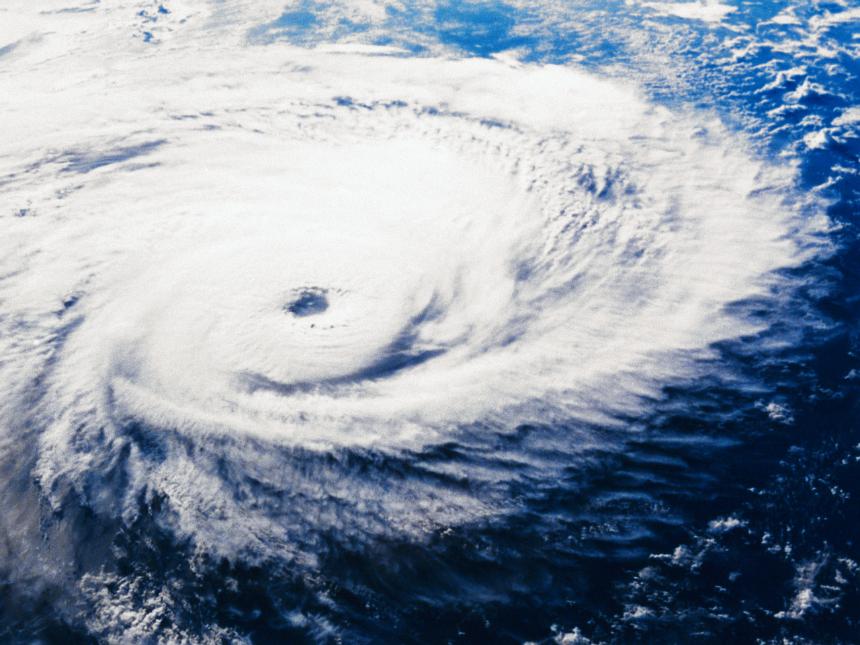
Hurricanes are whirling tropical cyclones that have occasionally had wind speeds exceeding 300 kilometers per hour. Hurricanes are the greatest storms on Earth and one of the most destructive natural disasters known to mankind. Hurricanes are able to annihilate coastal areas and cause massive death tolls.
- Define a hurricane.
A hurricane is a tropical cyclonic storm having minimum winds of 119 kilometers per hour.
- Where do typhoons occur?
Typhoons occur in the western Pacific.
- Where do cyclones occur?
Cyclones occur in the Bay of Bengal and the Indian Ocean.
- Where do most hurricanes develop and why? NOTE: The ingredients for a hurricane to form are ocean waters above 80-82° F., warm air, a low pressure disturbance (coming from the two possible locations noted above), and the Coriolis effect. What the website also does not mention is that hurricanes do not form at the equator. They can only form 5-20° north or south of the equator because of the Coriolis effect. Remember there is no Coriolis effect at the equator. As the low pressure disturbance moves across the Atlantic Ocean, the Coriolis effect organizes the storms into a single rotating entity. As it intensifies, it may become a tropical storm or even a hurricane.
Most hurricanes form between latitudes of 5° and 20° over the tropical oceans except the South Atlantic and the eastern South Pacific. Many tropical storms achieve hurricane status in the western parts of oceans, but their origins often lie far to the east. Disorganized arrays of clouds and thunderstorms, called tropical disturbances, sometimes develop and exhibit weak pressure gradients and little or no rotation. Occasionally tropical disturbances grow larger and develop a strong cyclonic rotation or hurricane. In the Atlantic Ocean most hurricanes form near the Cape Verde Islands off the coast of west Africa. These tropical depressions soon gain energy as they travel over the warm waters of the Atlantic ocean. If they continue to gain intensity and strength then a hurricane may form.
- What are the characteristics of the hurricane eye?
The hurricane eye is a circular area of relatively light winds and fair weather (calm) at the center of the hurricane.
- Describe the characteristics of the eye wall.
The eye wall of a hurricane is the doughnut-shaped area of intensive cumulonimbus development and very strong winds that surround the eye of a hurricane.
- Now go back to NASA’s Hurricane Center and look for the link “Hurricane Hot Towers” and answer the following. What is TRMM? Briefly summarize what role do hot towers play in hurricanes?
TRMM stands for Tropical Rainfall Measuring Mission. The Tropical Rainfall Measuring Mission is a joint mission between NASA and the Japan Aerospace Exploration Agency designed to monitor and study tropical rainfall. Hot towers may appear when the hurricane is about to intensify.
- Briefly explain how hot towers form?
Hot towers form when large amounts of latent heat are released as water vapor condenses into liquid and freezes into ice. Hot towers reach out from the troposphere to the tropopause and into the stratosphere. These high towers of energy can intensify the energy of the hurricane.
- What are feeder bands?
Feeder bands are the bands of thunderstorms that spiral into and around the center of a tropical system. They occur in advance of the main rain shield and are usually 40 to 80 miles apart. In thunderstorm development, they are the bands of low level clouds that move or feed into the updraft region of a thunderstorm.
- Describe in your own words the dangerous characteristics of hurricanes.
The most dangerous characteristics of a hurricane are its high winds which are very destructive to homes and property and the storm surge which can flood an area. Lives are lost every year due to hurricanes. The most deadly aspects of the hurricane are the flooding from the storm surge can overtake people suddenly causing loss of life and destruction of property. High speed winds are another dangerous characteristic that can cause debris to become flying missiles that can kill. The winds can topple trees and power lines, flip cars, peel off roofs and batter boats. Hurricanes can also spawn tornadoes that can lead to more destruction and loss of life.
- What are some of the dangerous effects caused by hurricanes?
Hurricanes are one of the most deadly and destructive forces of nature. Some of the most deadly storms have been hurricanes. On November 13, 1970, storm surge from a hurricane inundated a region of Bangladesh killing anywhere from 200,000 to 500,000 people. More than 6,000 people died in Galveston, Texas in 1900 when a 20 foot storm surge flooded the area. Most hurricane deaths are from the flooding from the storm surge and heavy rains associated with the hurricane. Nine out of ten hurricane deaths are from the flooding. The second leading cause of death is high wind speed. Other dangerous effects are flash floods and landslides.
- What are some of the technologies that meteorologists use to predict hurricanes?
Some of the technologies that meteorologists use to predict hurricanes are satellites, aircraft reconnaissance, radar and data buoys.
- What are “hurricane hunters?”
Hurricane hunters are aircraft who chase and fly into hurricanes in the North Atlantic Ocean and the Northeastern Pacific Ocean in order to collect data about the tropical cyclone.
- What are dropwindsondes and what do they do?
A dropwindsonde is a meteorological instrument that descends from an aircraft to the sea surface, transmitting information back to the aircraft while in the air. Dropwindsondes gather vital information such as temperature, pressure, winds, and humidity every half-second as it descends through the storm. This real time information will determine a hurricane's future track and likely landfall position.
- What is the difference between a hurricane watch and a hurricane warning?
A hurricane watch is an announcement aimed at specific coastal areas that a hurricane poses a possible threat. The hurricane watch is generally within 36 hours of landfall. The hurricane warning is issued when sustained winds of 119 kilometers per hour of higher are expected within a specific coastal area within 24 hours.
Reflections
I’ll have to admit that I didn’t expect another assignment, so the hurricane assignment kind of threw me for a loop. I did learn a little more about hurricanes, how they form and their destructive force. I hadn’t heard of hot towers and feeder bands before so that was very informative. The amount of destruction from hurricanes is incredible. I’m sure that people who live with the threats of hurricanes do not look forward to hurricane season and probably celebrate when the season is over. I enjoyed the National Geographic clips and interactive and the Katrina videos were really good. I feel so sorry for all of those people who lost everything and had to start a new life. It really made me appreciate living in southern Utah where our threats of a natural disaster are minimal.
